
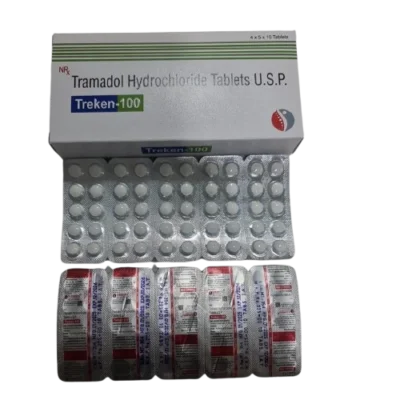
Traken 100 mg (Tramadol)
Price range: $399.00 through $749.00
Effective Painkillers to Treat Pain
Trending Painkiller:
Sold 450 Packs in last 30 days
Genuine Medication
US To US Delivery in 3-4 Days
Lowest Price Guaranteed (Without Prescription)
Description
Traken 100 mg (Tramadol Hydrochloride)
Traken 100 mg is an oral, centrally acting dual-mechanism analgesic formulation containing tramadol hydrochloride. It produces analgesia through two complementary pathways: low-affinity binding as an agonist at $\mu$-opioid receptor sites, and simultaneous inhibition of the neuronal reuptake of norepinephrine and serotonin ($\text{5-HT}$). This combined pharmacodynamic profile modifies both ascending nociceptive processing and descending inhibitory pain pathways within the central nervous system.
Product Overview
| Attribute | Specification |
| Active Ingredient | Tramadol Hydrochloride (100 mg per unit) |
| Drug Class | Centrally Acting Synthetic Opioid Analgesic / Dual Reuptake Inhibitor |
| Dosage Form | Oral tablet / capsule |
| Prescription Status | Controlled Substance (Schedule IV / Prescription-only medicine) |
| Onset of Action | Approximately 30 to 60 minutes |
| Duration of Effect | Approximately 4 to 6 hours (immediate release) |
| Metabolic Pathway | Extensive hepatic metabolism via CYP2D6 (yielding the active $O$-desmethyltramadol / $\text{M1}$ metabolite) and CYP3A4 (yielding inactive $N$-desmethyltramadol / $\text{M2}$) |
| Elimination Half-Life | Parent drug: ~6 hours; active $\text{M1}$ metabolite: ~7 to 9 hours |
Primary Indications
Traken 100 mg is indicated under licensed clinical supervision for:
-
Moderate to Moderately Severe Acute Pain: Short-term relief of severe acute musculoskeletal injuries, post-traumatic distress, or post-surgical pain where non-opioid regimens (e.g., standard NSAIDs or paracetamol) prove insufficient or clinically inappropriate.
-
Refractory Chronic Pain: Controlled management of persistent, chronic pain conditions (such as severe degenerative joint disease or neuropathic pain syndromes) when alternative analgesic strategies fail to achieve adequate functional relief.
Key Information & Precautions
-
Dosage & Daily Ceilings: Must be administered strictly in accordance with physician guidance. The total daily intake of immediate-release tramadol should generally not exceed 400 mg per day in adults with normal renal and hepatic function (often lower, e.g., 300 mg/day, in elderly patients or those with organ impairment) to minimize the risk of severe adverse events.
-
CYP2D6 Polymorphism & Variable Analgesia: The analgesic efficacy of tramadol heavily depends on its bioactivation to the potent $\text{M1}$ metabolite by the cytochrome P450 2D6 (CYP2D6) enzyme. “Poor metabolizers” may experience inadequate pain relief, whereas “ultra-rapid metabolizers” face an elevated risk of rapid toxicity and respiratory depression even at standard therapeutic doses.
-
Seizure Vulnerability: Tramadol significantly lowers the seizure threshold. Convulsion risks escalate sharply at elevated dosages or when co-administered with epileptogenic medications, including SSRIs, SNRIs, tricyclic antidepressants, bupropion, or antipsychotics.
-
Serotonin Syndrome Hazard: Due to its monoaminergic reuptake inhibition, concurrent administration with other serotonergic agents (e.g., MAOIs, triptans, linezolid, St. John’s Wort) can precipitate life-threatening serotonin toxicity (hyperreflexia, autonomic instability, clonus, hyperthermia).
-
Dependence, Tolerance, and Misuse Liability: Although possessing lower $\mu$-opioid receptor affinity than classic strong opioids, tramadol carries a confirmed liability for physical dependence, tolerance, and substance misuse.
-
Atypical Withdrawal Profile: Sudden discontinuation after prolonged therapy can induce conventional opioid withdrawal symptoms (sweating, chills, nausea, tachycardia) alongside atypical neuropsychiatric effects tied to serotonin/norepinephrine rebound (panic, hallucinations, paresthesias). Tapering is mandatory.
-
Boxed Warning — Concomitant Depressants & Respiratory Depression: Co-administration with benzodiazepines, other sedative-hypnotics, or alcohol dramatically amplifies the risk of profound sedation, life-threatening respiratory depression, coma, and fatal overdose.
-
Impairment of Motor Skills: Tramadol frequently causes somnolence, dizziness, and cognitive dampening. Operating motor vehicles or complex machinery is strictly ill-advised until individual patient tolerance is fully confirmed.
Additional information
| Select Packege Us To Us | 180 Pills, 360 Pills |
|---|
Related products
-
- Sale!
ASPADOL 100 MG
- Price range: $449.00 through $899.00
- Select options This product has multiple variants. The options may be chosen on the product page
-
- Sale!
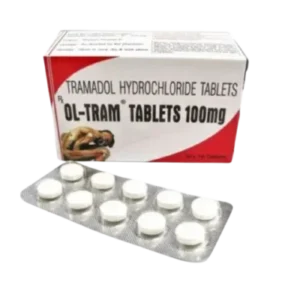
OL TRAM 100 MG
- Price range: $470.00 through $850.00
- Select options This product has multiple variants. The options may be chosen on the product page
-
- Sale!
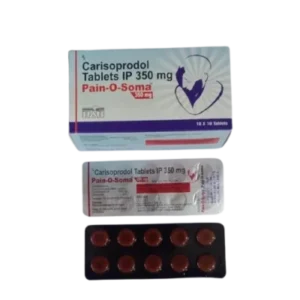
Pain O Soma 350mg (carisoprodol)
- Price range: $299.00 through $599.00
- Select options This product has multiple variants. The options may be chosen on the product page
Reviews
There are no reviews yet.